Tandem is a mobile language exchange and language learning app. == History == Tandem was founded in Hannover, Germany in 2014 by Arnd Aschentrup, Tobias Dickmeis, and Matthias Kleimann. Prior to founding Tandem, the trio had launched Vive, a members-only mobile video chat platform. Tandem has been criticised for not accepting members into the community immediately, as opposed to competitors including HelloTalk, Speaky or Cafehub. In some countries, there is a waiting list and applicants can wait up to seven days for their application to be processed by human moderators. In 2015, Tandem completed its first funding round (seed funding) of €600,000. Participating investors included business angels such as Atlantic Labs (Christophe Maire), Hannover Beteiligungsfonds, Marcus Englert (Chairman of the Supervisory Board of Rocket Internet SE ), Catagonia, Ludwig zu Salm, Florian Langenscheidt, Heiko Hubertz, Martin Sinner, and Zehden Enterprises. In 2016, the company received a further €2 million from new investors Rubylight and Faber Ventures, as well as from existing investors Hannover Beteiligungsfonds, Atlantic Labs, and Zehden Enterprises. Since 2018, the premium membership Tandem Pro has been available, which offers members unlimited access to all language learning features of the app as well as the removal of advertising for a monthly fee.
Sketch Engine
Sketch Engine is a corpus manager and text analysis software developed by Lexical Computing since 2003. Its purpose is to enable people studying language behaviour (lexicographers, researchers in corpus linguistics, translators or language learners) to search large text collections according to complex and linguistically motivated queries. Sketch Engine gained its name after one of the key features, word sketches: one-page, automatic, corpus-derived summaries of a word's grammatical and collocational behaviour. Currently, it supports and provides corpora in over 100 languages. == History of development == Sketch Engine is a product of Lexical Computing, a company founded in 2003 by the lexicographer and research scientist Adam Kilgarriff. He started a collaboration with Pavel Rychlý, a computer scientist working at the Natural Language Processing Centre, Masaryk University, and the developer of Manatee and Bonito (two major parts of the software suite). Kilgarriff also introduced the concept of word sketches. Since then, Sketch Engine has been commercial software, however, all the core features of Manatee and Bonito that were developed by 2003 (and extended since then) are freely available under the GPL license within the NoSketch Engine suite. == Features == A list of tools available in Sketch Engine: Word sketches – a one-page automatic derived summary of a word's grammatical and collocational behaviour Word sketch difference – compares and contrasts two words by analysing their collocations Distributional thesaurus – automated thesaurus for finding words with similar meaning or appearing in the same/similar context Concordance search – finds occurrences of a word form, lemma, phrase, tag or complex structure Collocation search – word co-occurrence analysis displaying the most frequent words (for a search word) which can be regarded as collocation candidates Word lists – generates frequency lists which can be filtered with complex criteria n-grams – generates frequency lists of multi-word expressions Terminology / Keyword extraction (both monolingual and bilingual) – automatic extraction of key words and multi-word terms from texts (based on frequency count and linguistic criteria) Diachronic analysis (Trends) – detecting words which undergo changes in the frequency of use in time (show trending words) Corpus building and management – create corpora from the Web or uploaded texts including part-of-speech tagging and lemmatization which can be used as data mining software Parallel corpus (bilingual) facilities – looking up translation examples (EUR-Lex corpus, Europarl corpus, OPUS corpus, etc.) or building a parallel corpus from own aligned texts Text type analysis – statistics of metadata in the corpus === Keywords and terminology extraction === Sketch Engine can perform automatic term extraction by identifying words typical of a particular corpus, document, or text. Single words and multi-word units can be extracted from monolingual or bilingual texts. The terminology extraction feature provides a list of relevant terms based on comparison with a large corpus of general language. This functionality is also available as a separate service called OneClick Terms with a dedicated interface. === SKELL === A free web service based on Sketch Engine and aimed at language learners and teachers is SKELL (formerly SkELL). It exploits Sketch Engine's proprietary GDEX (Good Dictionary Examples) scoring function to provide authentic example sentences for specific target words. Results are drawn from a special corpus of high-quality texts covering everyday, standard, formal, and professional language and displayed as a concordance. SKELL also includes simplified versions of Sketch Engine's word sketch and thesaurus functions. It has been suggested that SKELL can be used, for instance, to help students understand the meaning and/or usage of a word or phrase; to help teachers wanting to use example sentences in a class; to discover and explore collocates; to create gap-fill exercises; to teach various kinds of homonyms and polysemous words. SKELL was first presented in 2014, when only English was supported. Later, support was added for Russian, Czech, German, Italian and Estonian. == List of text corpora == Sketch Engine provides access to more than 800 text corpora. There are monolingual as well as multilingual corpora of different sizes (from one thousand words up to 85 billion words) and various sources (e.g. web, books, subtitles, legal documents). The list of corpora includes British National Corpus, Brown Corpus, Cambridge Academic English Corpus and Cambridge Learner Corpus, CHILDES corpora of child language, OpenSubtitles (a set of 60 parallel corpora), 24 multilingual corpora of EUR-Lex documents, the TenTen Corpus Family (multi-billion web corpora), and Trends corpora (monitor corpora with daily updates). == Architecture == Sketch Engine consists of three main components: an underlying database management system called Manatee, a web interface search front-end called Bonito, and a web interface for corpus building and management called Corpus Architect. === Manatee === Manatee is a database management system specifically devised for effective indexing of large text corpora. It is based on the idea of inverted indexing (keeping an index of all positions of a given word in the text). It has been used to index text corpora comprising tens of billions of words. Searching corpora indexed by Manatee is performed by formulating queries in the Corpus Query Language (CQL). Manatee is written in C++ and offers an API for a number of other programming languages including Python, Java, Perl and Ruby. Recently, it was rewritten into Go for faster processing of corpus queries. === Bonito === Bonito is a web interface for Manatee providing access to corpus search. In the client–server model, Manatee is the server and Bonito plays the client part. It is written in Python. === Corpus Architect === Corpus Architect is a web interface providing corpus building and management features. It is also written in Python. == Applications == Sketch Engine has been used by major British and other publishing houses for producing dictionaries such as Macmillan English Dictionary, Dictionnaires Le Robert, Oxford University Press or Shogakukan. Four of United Kingdom's five biggest dictionary publishers use Sketch Engine.
Ethics of artificial intelligence
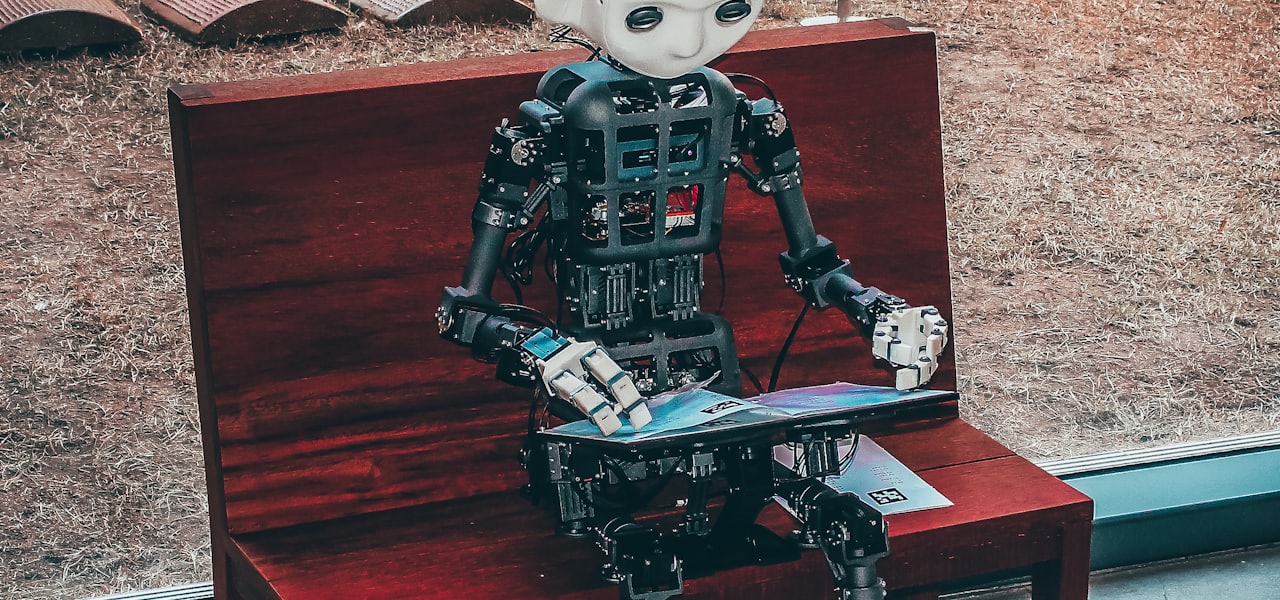
The ethics of artificial intelligence covers a broad range of topics within AI that are considered to have particular ethical stakes. This includes algorithmic biases, fairness, accountability, transparency, privacy, and regulation, particularly where systems influence or automate human decision-making. It also covers various emerging or potential future challenges such as machine ethics (how to make machines that behave ethically), lethal autonomous weapon systems, arms race dynamics, AI safety and alignment, technological unemployment, AI-enabled misinformation, how to treat certain AI systems if they have a moral status (AI welfare and rights), artificial superintelligence and existential risks. Some application areas may also have particularly important ethical implications, like healthcare, education, criminal justice, or the military. == Machine ethics == Machine ethics (or machine morality) is the field of research concerned with designing Artificial Moral Agents (AMAs), robots or artificially intelligent computers that behave morally or as though moral. To account for the nature of these agents, it has been suggested to consider certain philosophical ideas, like the standard characterizations of agency, rational agency, moral agency, and artificial agency, which are related to the concept of AMAs. There are discussions on creating tests to see if an AI is capable of making ethical decisions. Alan Winfield concludes that the Turing test is flawed and the requirement for an AI to pass the test is too low. A proposed alternative test is one called the Ethical Turing Test, which would improve on the current test by having multiple judges decide if the AI's decision is ethical or unethical. Neuromorphic AI could be one way to create morally capable robots, as it aims to process information similarly to humans, nonlinearly and with millions of interconnected artificial neurons. Similarly, whole-brain emulation (scanning a brain and simulating it on digital hardware) could also in principle lead to human-like robots, thus capable of moral actions. And large language models are capable of approximating human moral judgments. Inevitably, this raises the question of the environment in which such robots would learn about the world and whose morality they would inherit – or if they end up developing human 'weaknesses' as well: selfishness, pro-survival attitudes, inconsistency, scale insensitivity, etc. In Moral Machines: Teaching Robots Right from Wrong, Wendell Wallach and Colin Allen conclude that attempts to teach robots right from wrong will likely advance understanding of human ethics by motivating humans to address gaps in modern normative theory and by providing a platform for experimental investigation. As one example, it has introduced normative ethicists to the controversial issue of which specific learning algorithms to use in machines. For simple decisions, Nick Bostrom and Eliezer Yudkowsky have argued that decision trees (such as ID3) are more transparent than neural networks and genetic algorithms, while Chris Santos-Lang argued in favor of machine learning on the grounds that the norms of any age must be allowed to change and that natural failure to fully satisfy these particular norms has been essential in making humans less vulnerable to criminal "hackers". Some researchers frame machine ethics as part of the broader AI control or value alignment problem: the difficulty of ensuring that increasingly capable systems pursue objectives that remain compatible with human values and oversight. Stuart Russell has argued that beneficial systems should be designed to (1) aim at realizing human preferences, (2) remain uncertain about what those preferences are, and (3) learn about them from human behaviour and feedback, rather than optimizing a fixed, fully specified goal. Some authors argue that apparent compliance with human values may reflect optimization for evaluation contexts rather than stable internal norms, complicating the assessment of alignment in advanced language models. == Challenges == === Algorithmic biases === AI has become increasingly inherent in facial and voice recognition systems. These systems may be vulnerable to biases and errors introduced by their human creators. Notably, the data used to train them can have biases. According to Allison Powell, associate professor at LSE and director of the Data and Society programme, data collection is never neutral and always involves storytelling. She argues that the dominant narrative is that governing with technology is inherently better, faster and cheaper, but proposes instead to make data expensive, and to use it both minimally and valuably, with the cost of its creation factored in. Friedman and Nissenbaum identify three categories of bias in computer systems: existing bias, technical bias, and emergent bias. In natural language processing, problems can arise from the text corpus—the source material the algorithm uses to learn about the relationships between different words. Large companies such as IBM, Google, etc. that provide significant funding for research and development have made efforts to research and address these biases. One potential solution is to create documentation for the data used to train AI systems. Process mining can be an important tool for organizations to achieve compliance with proposed AI regulations by identifying errors, monitoring processes, identifying potential root causes for improper execution, and other functions. However, there are also limitations to the current landscape of fairness in AI, due to the intrinsic ambiguities in the concept of discrimination, both at the philosophical and legal level. ==== Racial and gender biases ==== Bias can be introduced through historical data used to train AI systems. For instance, Amazon terminated their use of AI hiring and recruitment because the algorithm favored male candidates over female ones. This was because Amazon's system was trained with data collected over a 10-year period that included mostly male candidates. The algorithms learned the biased pattern from the historical data, and generated predictions where these types of candidates were most likely to succeed in getting the job. Therefore, the recruitment decisions made by the AI system turned out to be biased against female and minority candidates. The performance of facial recognition and computer vision models may vary based on race and gender. Facial recognition algorithms made by Microsoft, IBM and Face++ all performed significantly worse on darker-skinned women. Facial recognition was shown to be biased against those with darker skin tones. AI systems may be less accurate for black people, as was the case in the development of an AI-based pulse oximeter that overestimated blood oxygen levels in patients with darker skin, causing issues with their hypoxia treatment. In 2015, controversy erupted after a Black couple were labeled "Gorillas" by Google Photos. Oftentimes the systems are able to easily detect the faces of white people while being unable to register the faces of people who are black. This has led to the ban of police usage of AI materials or software in some U.S. states. The reason for these biases is that AI pulls information from across the internet to influence its responses in each situation. For example, if a facial recognition system was only tested on people who were white, it would make it much harder for it to interpret the facial structure and tones of other races and ethnicities. Biases often stem from the training data rather than the algorithm itself, notably when the data represents past human decisions. A 2020 study that reviewed voice recognition systems from Amazon, Apple, Google, IBM, and Microsoft found that they have higher error rates when transcribing black people's voices than white people's. Injustice in the use of AI is much harder to eliminate within healthcare systems, as oftentimes diseases and conditions can affect different races and genders differently. This can lead to confusion as the AI may be making decisions based on statistics showing that one patient is more likely to have problems due to their gender or race. This can be perceived as a bias because each patient is a different case, and AI is making decisions based on what it is programmed to group that individual into. This leads to a discussion about what should be considered a biased decision in the distribution of treatment. While it is known that there are differences in how diseases and injuries affect different genders and races, there is a discussion on whether it is fairer to incorporate this into healthcare treatments, or to examine each patient without this knowledge. In modern society there are certain tests for diseases, such as breast cancer, that are recommended to certain groups of people over others because they are more likely to contract the disease in question. If AI implements these statistics
AlphaGo
AlphaGo is a computer program that plays the board game Go. It was developed by the London-based DeepMind Technologies, an acquired subsidiary of Google. Subsequent versions of AlphaGo became increasingly powerful, including a version that competed under the name Master. After retiring from competitive play, AlphaGo Master was succeeded by an even more powerful version known as AlphaGo Zero, which was completely self-taught without learning from human games. AlphaGo Zero was then generalized into a program known as AlphaZero, which played additional games, including chess and shogi. AlphaZero has in turn been succeeded by a program known as MuZero which learns without being taught the rules. AlphaGo and its successors use a Monte Carlo tree search algorithm to find its moves based on knowledge previously acquired by machine learning, specifically by an artificial neural network (a deep learning method) by extensive training, both from human and computer play. A neural network is trained to identify the best moves and the winning percentages of these moves. This neural network improves the strength of the tree search, resulting in stronger move selection in the next iteration. In October 2015, in a match against Fan Hui, the original AlphaGo became the first computer Go program to beat a human professional Go player without handicap on a full-sized 19×19 board. In March 2016, it beat Lee Sedol in a five-game match, the first time a computer Go program has beaten a 9-dan professional without handicap. Although it lost to Lee Sedol in the fourth game, Lee resigned in the final game, giving a final score of 4 games to 1 in favour of AlphaGo. In recognition of the victory, AlphaGo was awarded an honorary 9-dan by the Korea Baduk Association. The lead up and the challenge match with Lee Sedol were documented in a documentary film also titled AlphaGo, directed by Greg Kohs. The win by AlphaGo was chosen by Science as one of the Breakthrough of the Year runners-up on 22 December 2016. At the 2017 Future of Go Summit, the Master version of AlphaGo beat Ke Jie, the number one ranked player in the world at the time, in a three-game match, after which AlphaGo was awarded professional 9-dan by the Chinese Weiqi Association. After the match between AlphaGo and Ke Jie, DeepMind retired AlphaGo, while continuing AI research in other areas. The self-taught AlphaGo Zero achieved a 100–0 victory against the early competitive version of AlphaGo, and its successor AlphaZero was perceived as the world's top player in Go by the end of the 2010s. == History == Go is considered much more difficult for computers to win than other games such as chess, because its strategic and aesthetic nature makes it hard to directly construct an evaluation function, and its much larger branching factor makes it prohibitively difficult to use traditional AI methods such as alpha–beta pruning, tree traversal and heuristic search. Almost two decades after IBM's computer Deep Blue beat world chess champion Garry Kasparov in the 1997 match, the strongest Go programs using artificial intelligence techniques only reached about amateur 5-dan level, and still could not beat a professional Go player without a handicap. In 2012, the software program Zen, running on a four PC cluster, beat Masaki Takemiya (9p) twice at five- and four-stone handicaps. In 2013, Crazy Stone beat Yoshio Ishida (9p) at a four-stone handicap. According to DeepMind's David Silver, the AlphaGo research project was formed around 2014 to test how well a neural network using deep learning can compete at Go. AlphaGo represents a significant improvement over previous Go programs. In 500 games against other available Go programs, including Crazy Stone and Zen, AlphaGo running on a single computer won all but one. In a similar matchup, AlphaGo running on multiple computers won all 500 games played against other Go programs, and 77% of games played against AlphaGo running on a single computer. The distributed version in October 2015 was using 1,202 CPUs and 176 GPUs. === Match against Fan Hui === In October 2015, the distributed version of AlphaGo defeated the European Go champion Fan Hui, a 2-dan (out of 9 dan possible) professional, five to zero. This was the first time a computer Go program had beaten a professional human player on a full-sized board without handicap. The announcement of the news was delayed until 27 January 2016 to coincide with the publication of a paper in the journal Nature describing the algorithms used. === Match against Lee Sedol === AlphaGo played South Korean professional Go player Lee Sedol, ranked 9-dan, one of the best players at Go, with five games taking place at the Four Seasons Hotel in Seoul, South Korea on 9, 10, 12, 13, and 15 March 2016, which were video-streamed live. Out of five games, AlphaGo won four games and Lee won the fourth game which made him recorded as the only human player who beat AlphaGo in all of its 74 official games. AlphaGo ran on Google's cloud computing with its servers located in the United States. The match used Chinese rules with a 7.5-point komi, and each side had two hours of thinking time plus three 60-second byoyomi periods. The version of AlphaGo playing against Lee used a similar amount of computing power as was used in the Fan Hui match. The Economist reported that it used 1,920 CPUs and 280 GPUs. At the time of play, Lee Sedol had the second-highest number of Go international championship victories in the world after South Korean player Lee Chang-ho who kept the world championship title for 16 years. Since there is no single official method of ranking in international Go, the rankings may vary among the sources. While he was ranked top sometimes, some sources ranked Lee Sedol as the fourth-best player in the world at the time. AlphaGo was not specifically trained to face Lee nor was designed to compete with any specific human players. The first three games were won by AlphaGo following resignations by Lee. However, Lee beat AlphaGo in the fourth game, winning by resignation at move 180. AlphaGo then continued to achieve a fourth win, winning the fifth game by resignation. The prize was US$1 million. Since AlphaGo won four out of five and thus the series, the prize will be donated to charities, including UNICEF. Lee Sedol received $150,000 for participating in all five games and an additional $20,000 for his win in Game 4. In June 2016, at a presentation held at a university in the Netherlands, Aja Huang, one of the Deep Mind team, revealed that they had patched the logical weakness that occurred during the 4th game of the match between AlphaGo and Lee, and that after move 78 (which was dubbed the "divine move" by many professionals), it would play as intended and maintain Black's advantage. Before move 78, AlphaGo was leading throughout the game, but Lee's move caused the program's computing powers to be diverted and confused. Huang explained that AlphaGo's policy network of finding the most accurate move order and continuation did not precisely guide AlphaGo to make the correct continuation after move 78, since its value network did not determine Lee's 78th move as being the most likely, and therefore when the move was made AlphaGo could not make the right adjustment to the logical continuation. === Sixty online games === On 29 December 2016, a new account on the Tygem server named "Magister" (shown as 'Magist' at the server's Chinese version) from South Korea began to play games with professional players. It changed its account name to "Master" on 30 December, then moved to the FoxGo server on 1 January 2017. On 4 January, DeepMind confirmed that the "Magister" and the "Master" were both played by an updated version of AlphaGo, called AlphaGo Master. As of 5 January 2017, AlphaGo Master's online record was 60 wins and 0 losses, including three victories over Go's top-ranked player, Ke Jie, who had been quietly briefed in advance that Master was a version of AlphaGo. After losing to Master, Gu Li offered a bounty of 100,000 yuan (US$14,400) to the first human player who could defeat Master. Master played at the pace of 10 games per day. Many quickly suspected it to be an AI player due to little or no resting between games. Its adversaries included many world champions such as Ke Jie, Park Jeong-hwan, Yuta Iyama, Tuo Jiaxi, Mi Yuting, Shi Yue, Chen Yaoye, Li Qincheng, Gu Li, Chang Hao, Tang Weixing, Fan Tingyu, Zhou Ruiyang, Jiang Weijie, Chou Chun-hsun, Kim Ji-seok, Kang Dong-yun, Park Yeong-hun, and Won Seong-jin; national champions or world championship runners-up such as Lian Xiao, Tan Xiao, Meng Tailing, Dang Yifei, Huang Yunsong, Yang Dingxin, Gu Zihao, Shin Jinseo, Cho Han-seung, and An Sungjoon. All 60 games except one were fast-paced games with three 20 or 30 seconds byo-yomi. Master offered to extend the byo-yomi to one minute when playing with Nie Weiping in consideration of his age. After winning its 59th game Master revealed itse
The Machine Question
The Machine Question: Critical Perspectives on AI, Robots, and Ethics is a 2012 nonfiction book by David J. Gunkel that discusses the evolution of the theory of human ethical responsibilities toward non-human things and to what extent intelligent, autonomous machines can be considered to have legitimate moral responsibilities and what legitimate claims to moral consideration they can hold. The book was awarded as the 2012 Best Single Authored Book by the Communication Ethics Division of the National Communication Association. == Content == The book is spread across three chapters, with the first two chapters focusing on an overall review of the history of philosophy and its discussion of moral agency, moral rights, human rights, and animal rights and the third chapter focusing on what defines "thingness" and why machines have been excluded from moral and ethical consideration due to a misuse of the patient/agent binary. The first chapter, titled Moral Agency, breaks down the history of said agency based on what it included and excluded in various parts of history. Gunkel also raises the conflict between discussing the morality of humans toward objects and the theory of the philosophy of technology that "technology is merely a tool: a means to an end". The main issue, he explains, in defining what constitutes an appropriate moral agent is that there will be things left outside of what is included, as the definition is based on a set of characteristics that will inherently not be all-encompassing. The subject of consciousness is broached and subsequently derided by Gunkel because of it being one of the main arguments against machine rights, while Gunkel points out that no "settled definition" of the term exists and that he considers it no better than a synonym used for "the occultish soul". In addition, the issue of the other minds problem entails that no proper understanding of consciousness can come to pass due to the inability to properly understand the mind of a being that is not oneself. The second chapter, titled Moral Patiency, focuses on the patient end of the topic and discusses the expansion of the fields of animal studies and environmental studies. Gunkel describes moral patients as the ones that are to be the object of moral consideration and deserve such consideration even if they lack their own agency, such as animals, thus allowing moral consideration itself to be broader and more inclusive. The topic of other minds is discussed again when examining the question of whether animals can suffer, a question that Gunkel ultimately abandons because it encounters the same problems that the topic of consciousness does. Especially because the subject of animal rights is often only afforded for the animals deemed to be "cute", but often not including "reptiles, insects, or microbes". Gunkel continues on to examine environmental ethics and information ethics, but finds them to be too anthropocentric, just as all the other examined models have been. The third chapter, titled Thinking Otherwise, proposes a combination of Heideggerian ontology and Levinasian ethics to properly discuss the otherness of technology and machines, but finds that the patient/agent binary is unable to be properly extended to confine the extent of "the machine question". In discussing the land ethic philosophy espoused by Aldo Leopold, Gunkel proposes that it is the entire relationship between agent and patient that should have moral consideration and not a specific definition based on either side, as each part contributes to the relationship as a whole and cannot be removed without breaking that relationship. == Critical reception == Choice: Current Reviews for Academic Libraries writer R. S. Stansbury explained that the book is able to use simple examples to discuss difficult topics and separate ideas and that it would be "useful for philosophy students, and for engineering students interested in exploring the ethical implications of their work". Dominika Dzwonkowska, writing for International Philosophical Quarterly, stated that the "unprecedented value of the book is that Gunkel not only analyzes important aspects of the immediate problem but also that he places his discussion in the context of philosophical discussions on such related issues as rights discourse." Mark Coeckelbergh in Ethics and Information Technology noted that focusing on the question itself of the machine question allows further exploration of machine ethics and the expansion of general ethics and that the book's questions point out that "good, critical philosophical reflection on machines is not only about how we should cope with machines, but also about how we (should) think and what role technology plays (and should play) in this thinking." A review in Notre Dame Philosophical Reviews by Colin Allen criticized some of Gunkel's methodology and the indecisiveness of his ultimate answer to the machine question, but also acknowledged that the book "succeeded in connecting the ethics of robots and AI to a much broader ethical discussion than has been represented in the literature on machine ethics to date". Blay Whitby, in a review for AISB Quarterly, lauded The Machine Question for its "clear exposition" and wide range of references to other works, concluding that the book is "essential reading for philosophers interested in AI, robot ethics, or animal ethics". In a twin review of The Machine Question and Robot Ethics: The Ethical and Social Implications of Robots by Patrick Lin, Keith Abney, and George A. Bekey, Techné: Research in Philosophy and Technology reviewer Jeff Shaw called Gunkel's book a good introduction to the "complex field of robot ethics" and that both books are "highly recommended to both the general reader as well as to experts in the field of robotics, philosophy, and ethics." In a 2017 paper for Ethics and Information Technology, Katharyn Hogan investigated whether the machine question presented by Gunkel in the book is any different from the longstanding animal question. She concludes that the real question that is revealed from this discussion is whether humans deserve any moral preference over artificial life in the first place.
AIX Toolbox for Linux Applications
The AIX Toolbox for Linux Applications is a collection of GNU tools for IBM AIX. These tools are available for installation using Red Hat's RPM format. == Licensing == Each of these packages includes its own licensing information and while IBM has made the code available to AIX users, the code is provided as is and has not been thoroughly tested. The Toolbox is meant to provide a core set of some of the most common development tools and libraries along with the more popular GNU packages.
Composite portrait
Composite portraiture (also known as composite photographs) is a technique invented by Sir Francis Galton in the 1880s after a suggestion by Herbert Spencer for registering photographs of human faces on the two eyes to create an "average" photograph of all those in the photographed group. Spencer had suggested using onion paper and line drawings, but Galton devised a technique for multiple exposures on the same photographic plate. He noticed that these composite portraits were more attractive than any individual member, and this has generated a large body of research on human attractiveness and averageness one hundred years later. He also suggested in a Royal Society presentation in 1883 that the composites provided an interesting concrete representation of human ideal types and concepts. He discussed using the technique to investigate characteristics of common types of humanity, such as criminals. In his mind, it was an extension of the statistical techniques of averages and correlation. In this sense, it represents one of the first implementations of convolution factor analysis and neural networks in the understanding of knowledge representation in the human mind. Galton also suggested that the technique could be used for creating natural types of common objects. During the late 19th century, English psychometrician Sir Francis Galton attempted to define physiognomic characteristics of health, disease, beauty, and criminality, via a method of composite photography. Galton's process involved the photographic superimposition of two or more faces by multiple exposures. After averaging together photographs of violent criminals, he found that the composite appeared "more respectable" than any of the faces comprising it; this was likely due to the irregularities of the skin across the constituent images being averaged out in the final blend. Since the advancement of computer graphics technology in the early 1990s, Galton's composite technique has been adopted and greatly improved using computer graphics software.